Idaho offers just about every kind of freshwater fishing an angler could ask for. But as great as the Gem State is, it doesn’t touch the ocean.
A few Christmases ago, my wife gifted me a Toadfish travel rod for away-from-home adventures. One of its primary functions is surf fishing — which is quickly becoming a favorite pastime.
I’ve fished ocean surf in several locations, including Oregon, Costa Rica and Belize. The past two Octobers, my family has spent fall break on the beautiful beaches of North Carolina, where I’ve truly begun honing my surf fishing game.
The first key to surf fishing is reading the water. Not all stretches of beach are equal. Learning to spot deeper holes — often marked by smaller waves breaking and/or a softer blue coloration — is vital to finding fish. Manmade structures like jetties and piers also attract all kinds of life. Spending time around such structures, or hiking the beach looking for holes, will increase your catch rates.
The second key to surf fishing is using the right gear. A medium-heavy spinning rod paired with a high-capacity reel is an ideal setup. I like to use 30-pound braided line and a monofilament leader of 12- or 15-pound test. My Toadfish rod is a well-built, 7-foot-6 outfit. It’s on the small end of the surf fishing spectrum, but traditional 9- and 10-foot rods aren’t travel-friendly.
Shiny spoons and heavy jigs are effective surf lures. In some scenarios, topwater plugs and jerkbaits will get eaten. But the best bet for catching something — which in the ocean can mean almost anything — is a bait rig. My go-to setup is a double dropper rig with three snap swivels. The bottom one gets a pyramid weight (usually 2 to 4 ounces) and the other two get hooks; circle hooks for cut bait, long-shanked j-hooks for chunks of shrimp or Berkley power worms.
Once you’re rigged up, fire a cast into the surf, aiming at obvious holes or pockets. The sinker will settle in the sandy bottom, and a regular cadence will commence as the waves wash in and out. The in-and-out cadence can be ignored — what we’relooking for is something irregular. I like to describe it as “shaky” or “alive.” The bite often occurs on what I call the “snap back,” as the rod is returning to an upright position on an incoming wave. When bites come, it’s important to set j-hooks quickly and sharply. With circle hooks, reel down hard until you feel the rod load with the weight of the fish.
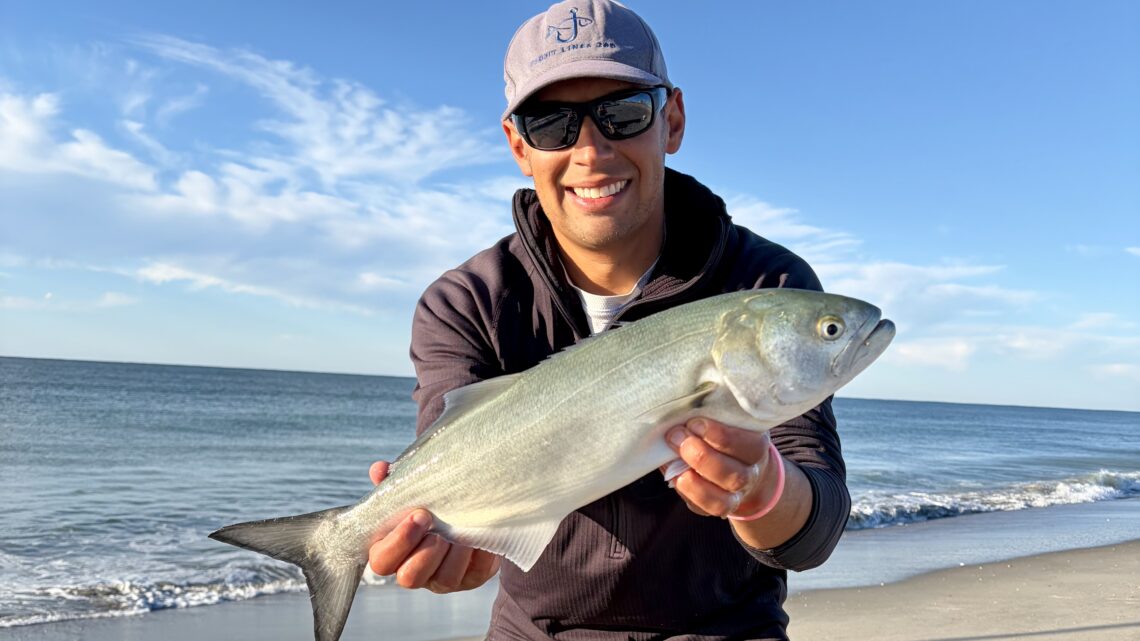
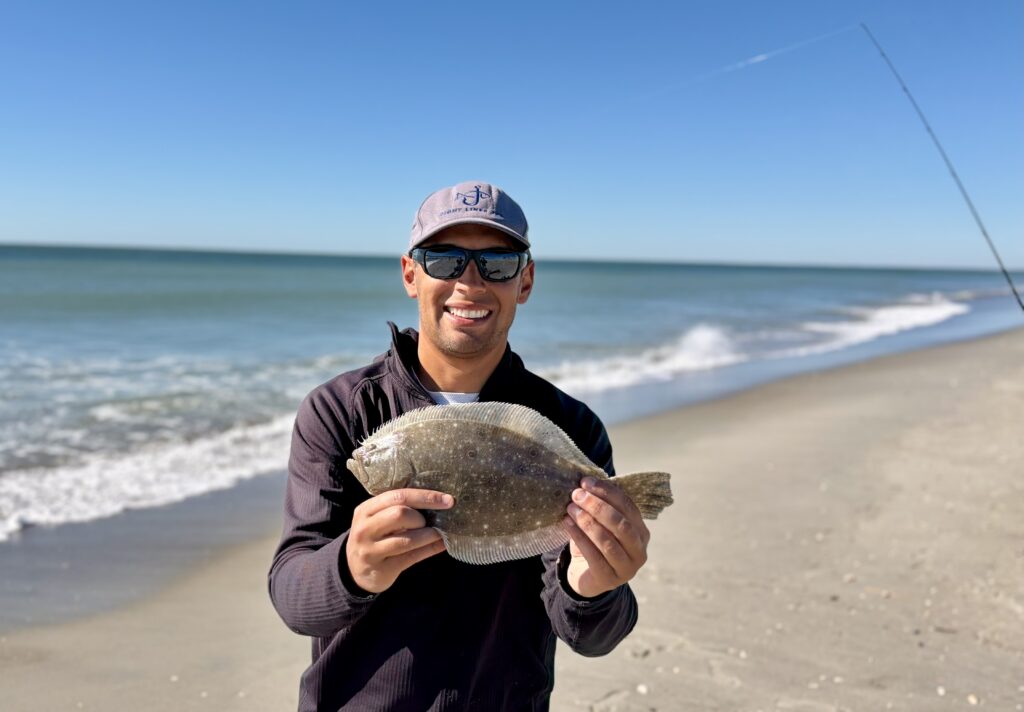
Catching fish in the surf is a unique thrill. They come in many shapes and sizes, and each species fights differently. In Carolina, I have landed 10 different species from the beach—flounder, bluefish, pompano, whiting, weakfish, croaker, pinfish, black drum, lizard fish and mullet. Pompano and pinfish are notorious nibblers and skilled bait stealers. Whiting are decisive, violent biters. Bluefish are also aggressive eaters, but a school of small ones is problematic, as they’ll strip your bait with razor-sharp teeth. Flounder fight hard with their wide, flat bodies. To date, my favorite Carolina beach catch is a nearly two-foot-long bluefish. This fast, powerful predator mixed drag-screaming runs with head-shaking leaps through the surf. What a battle!
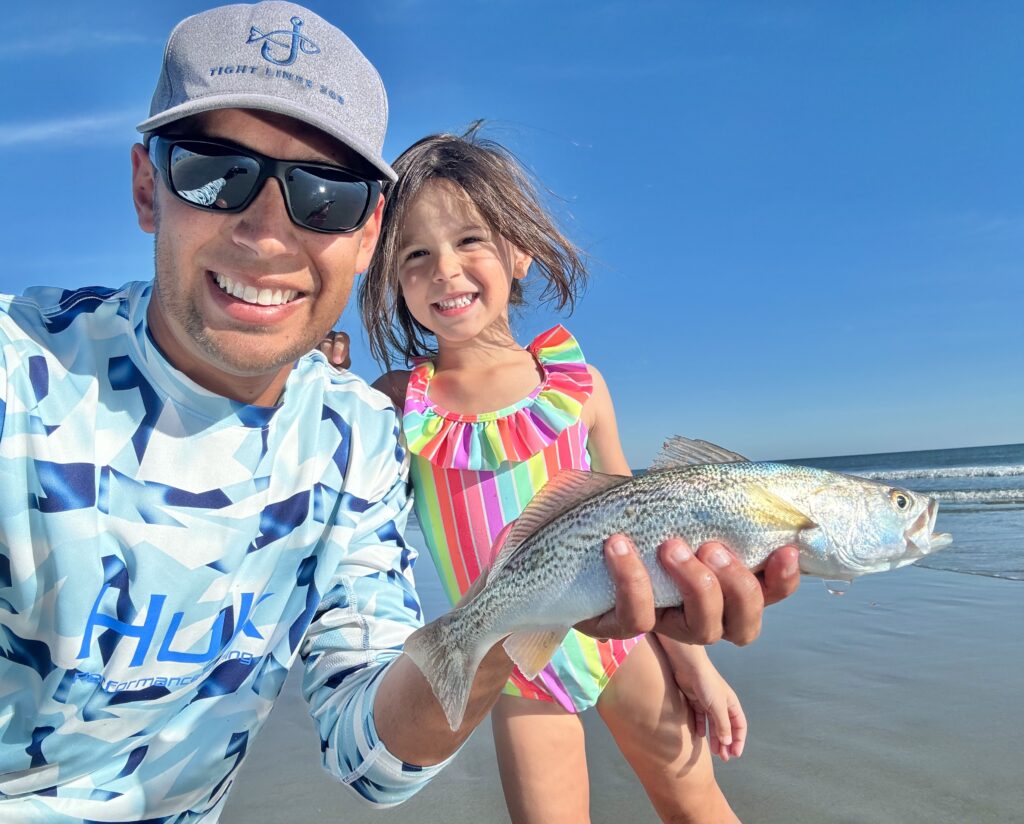
Big catches can be few and far between on the beach, but there’s usually plenty of action. Harvest opportunities abound if you’re into cooking up your own fresh fish and chips. It’s fun for kids (and you can easily leave rods set up in holders while you build a sandcastle). And surf fishing’s “you never know what you’re going to get” vibe is perfect for a fish enthusiast like me. On any given cast, you might catch something big. Something new. Something you can’t evn identify without Google.
That’s more than enough excitement to keep me coming back to the surf. Tight lines!